
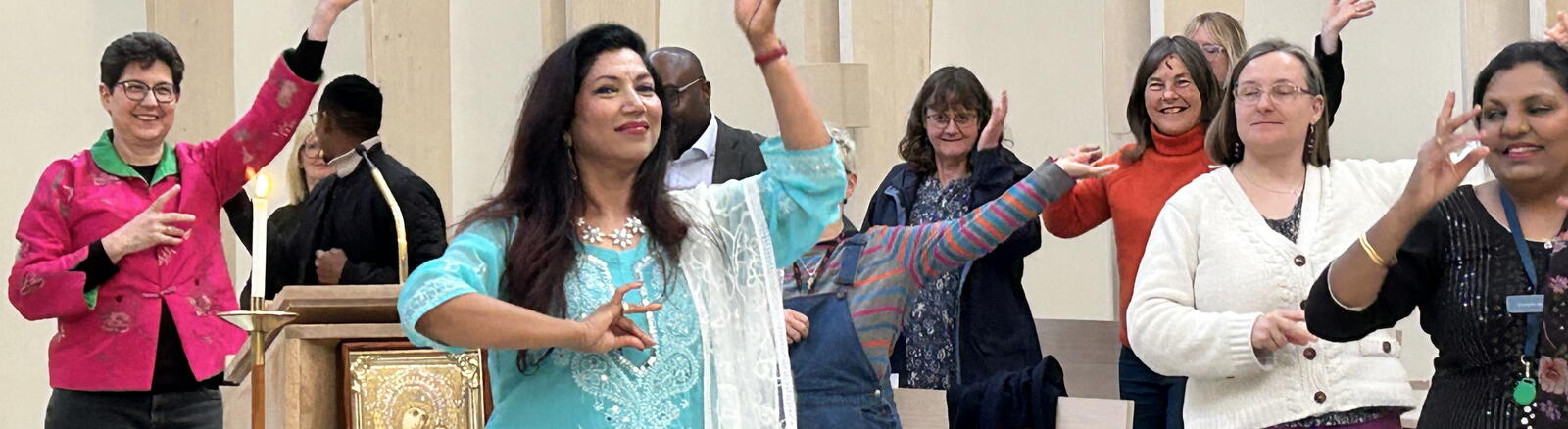
After a session on antiracism, I felt inspired to organise a multilingual worship evening during the Easter School at Cuddesdon. As a community made up of people from different cultures, countries, and linguistic backgrounds, it felt important to create a space where this diversity was not only acknowledged but celebrated as an expression of our shared faith. Motivated by this vision, I reached out to a couple of colleagues and shared my ideas with them. They were immediately supportive and enthusiastic, which gave me confidence to take the idea forward collaboratively.
When we met on Tuesday evening, the response was overwhelmingly positive. What stood out most was the openness and creativity within the group. Our brainstorming session became a space of deep listening and mutual respect, where we explored different ways to shape the service so that everyone could participate meaningfully. We discussed the use of multiple languages in prayers, scripture readings, and music, and how these elements could be woven together to form one coherent act of worship rather than separate parts.
The worship service itself was very well received. Hearing familiar prayers spoken in different tongues created a powerful sense of unity-in-diversity, reminding us that worship transcends language and culture. Many participants commented on how valued and visible they felt, particularly those whose first language is not English. For me, the experience reaffirmed the importance of inclusive practices in worship and showed how intentional planning, grounded in antiracist values, can transform communal spaces into places of genuine belonging.
Overall, the process and the service were deeply encouraging, and it reinforced my commitment to embedding inclusivity and cultural awareness into worship and theological formation.
Madhuri Kulkarni, Part-Time Pathway